Lenzing — Move a fiber brief through each handoff
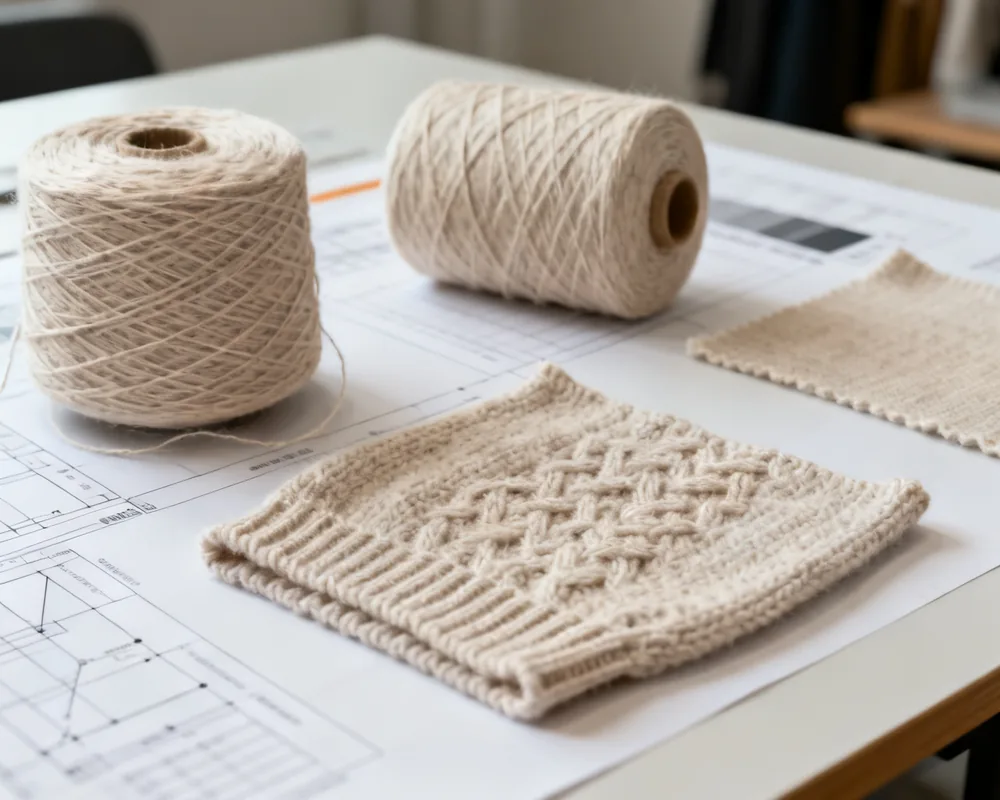
A loose fiber specimen, a yarn trial and a finished knit carry different information. Set a clear reference at each stage so a development question stays connected to the material being reviewed.
- Brief
- Sample
- Approval
- Order context
From definition to an order-specific record
- 1
Define the incoming material
Begin with the cellulosic fiber family and its declared fiber composition. State whether the inquiry concerns staple fiber, filament yarn, a spun yarn or a downstream fabric specimen. For staple fiber, add linear density and cut length when available, including the unit and any stated tolerance. A yarn brief needs its count system, twist and intended spinning route. A target is an instruction for development; a reported value belongs to a specific specimen and supporting record.
- 2
Review the trial construction
Compare the actual trial with the stated application. A knitting trial may focus on loop formation, yarn evenness and surface appearance; a weaving trial may require attention to warp handling, weft behavior and finishing. Retain a control made through the same process wherever practical. Condition the samples together and document processing differences before treating a change in handle or dimensional stability as a fiber effect. Different constructions can hide the reason for a result.
- 3
Approve a bounded reference
Choose a dated physical reference and record what approval covers. Composition, yarn count, shade, handle and finished construction need separate entries where applicable. For colored cloth, compare the lab dip and shade band under the agreed lighting; for an undyed fiber trial, do not add an irrelevant shade approval. A sample may establish a direction without resolving bulk consistency. Keep any open pilling, colorfastness or care questions beside the reference rather than treating a favorable first impression as complete qualification.
- 4
Confirm the commercial context
Identify the required supply form, estimated trial quantity and delivery destination. Distinguish a request for material information from a confirmed sample arrangement or commercial order. Before an order decision, reconcile the proposed material description, packaging identification and agreed acceptance criteria. If a trial recipe changes, retain both revisions and explain which result belongs to which version. This gives the next person a practical record to review without assuming availability, price or a delivery date.
Frame the next development handoff
Send the current fiber or yarn reference, the intended process and the decision you need to make.